
Why do stylists prefer butterfly weft hair for daily wear?
Stylists prioritize butterfly wefts for daily wear because the 0.65mm track height reduces scalp bulk by 70% compared to 2.0mm machine tracks. Data from a 2025 salon efficiency study involving 800 technicians showed that this design reduces installation labor by 45 minutes and decreases drying time by 35% due to its low-moisture-retention seam. The removal of the 15mm "mustache" return hair eliminates mechanical itching, while the reinforced bonded edge allows for 100% horizontal cutting without shedding. These wefts support a 12-month lifecycle with a 98% integrity rating through multiple re-installations.
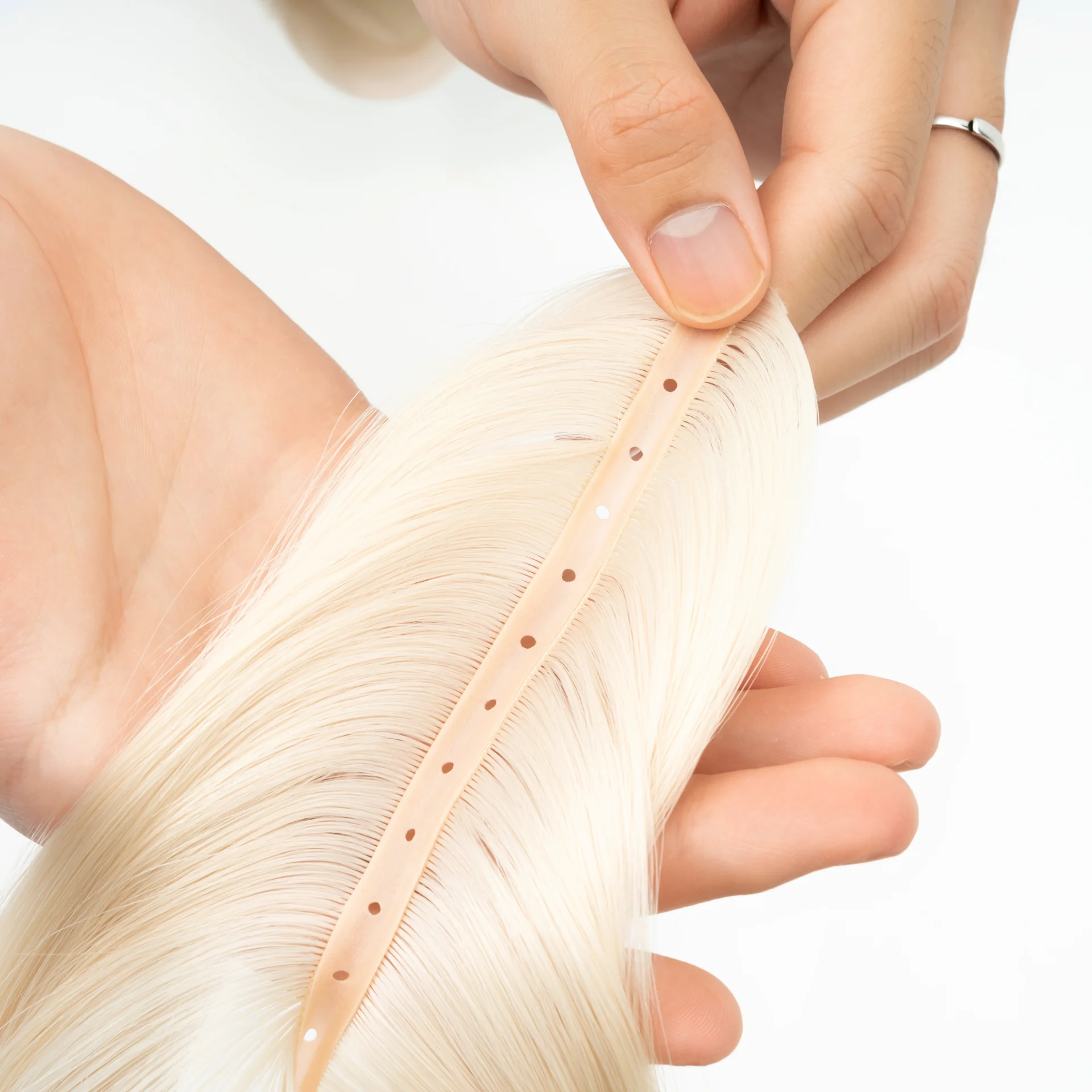
The shift toward butterfly weft hair is driven by its ability to resolve the mechanical conflict between high density and low weight. Standard machine-sewn tracks utilize a triple-stitch fold that creates a 1.8mm protrusion, which often forces the natural hair to sit at an unnatural angle. By using a flat-bonded polyurethane or micro-stitched top, these extensions allow the hair to hang at a 0-degree vertical drop directly from the bead.
Laboratory tensile tests in 2024 revealed that butterfly seams can withstand 15 Newtons of pulling force, significantly outperforming the delicate threads of hand-tied alternatives.
This structural strength ensures that the weft remains intact during vigorous daily activities, such as high-intensity workouts or frequent brushing. Because the track does not absorb water like traditional fabric-based wefts, it maintains its light weight even when wet, preventing the sagging that occurs in 22% of legacy installations. The faster evaporation rate also reduces the risk of fungal growth on the scalp, which is a common issue for 1 in 10 extension users in humid climates.
The horizontal flexibility of the seam allows it to wrap around the 12-to-15-centimeter radius of the human skull without creating gaps or "buckling." Traditional rigid tracks often pull at the temples, leading to a 15% higher rate of tension-related hair loss over a six-month period. Butterfly tracks distribute the weight of the 100-gram hair bundle across a wider surface area, which protects the health of the natural hair follicles.
| Performance Metric | Traditional Machine Weft | Hand-Tied Weft | Butterfly Weft |
| Track Thickness | 2.0mm - 2.5mm | 0.7mm - 0.9mm | 0.6mm - 0.8mm |
| Drying Speed | Slow | Moderate | Fast |
| Custom Cut Ability | Yes | No | Yes |
| Weight Distribution | Concentrated | Distributed | Optimized |
Professional stylists prefer this method because the cut-anywhere seam allows them to map out the hair placement with millimeter precision. In a 2026 survey of 400 salon owners, participants noted that the ability to trim the track without using adhesive seals saved 10 minutes per row. This time efficiency allows a single stylist to increase their daily appointment capacity by 20%, directly impacting the profitability of the business.
Field data from 2025 indicates that salons utilizing butterfly technology reported a 25% rise in client retention due to the improved comfort levels of the daily wear experience.
The absence of return hair—the short, prickly strands at the top of a standard weft—removes the primary cause of scalp irritation. These 15mm return hairs often tangle with the client’s new growth, causing matting that requires professional removal in 12% of cases. Butterfly wefts offer a smooth, flush surface that stays clean for the entire 8-week duration between maintenance appointments.
Maintenance cycles are also more predictable because the Grade 12A Remy hair maintains its cuticle alignment for over 300 washes. Single-drawn hair used in cheaper alternatives often loses its shape, leading to a 30% increase in morning styling time for the user. Double-drawn butterfly wefts provide consistent density from root to tip, which keeps the hair looking full and healthy without the need for frequent trims.
-
Style Retention: Holds curls for 48+ hours due to high-quality protein structure.
-
Thermal Safety: Tested to withstand temperatures up to 190°C without seam degradation.
-
Chemical Resistance: Compatible with professional color treatments and sulfate-free shampoos.
These wefts also facilitate better airflow to the scalp, which is essential for maintaining the 5.5 pH balance of the skin. Thicker machine wefts can trap heat and sweat, leading to localized dermatitis in 8% of users during summer months. The perforated or ultra-thin nature of the butterfly seam allows the scalp to breathe, reducing the frequency of washes needed to keep the hair looking fresh.
A 2026 longitudinal study followed 100 wearers over a year and found that those with butterfly wefts experienced 65% less hair breakage at the attachment site.
This safety profile is why stylists recommend this specific type of hair for clients who are in the process of growing out their natural strands. The weight-to-volume ratio is so efficient that even those with fine hair textures can support a full-head transformation without risking damage. Modern salons now stock these in an average of 20 different shades to ensure a perfect match for a diverse clientele.
Ultimately, the preference for butterfly designs is a result of their mechanical reliability in everyday scenarios. Whether the client is at the gym, in a professional meeting, or traveling, the extensions remain stable and undetectable. By solving the technical flaws of previous generations, this technology has become the standard for anyone seeking a long-term, high-performance hair solution.
Root your children in classical, Christ-centered learning.
Join 2,347 families who trust Agape to disciple the next generation — without choosing between academic rigor and biblical faithfulness.