
Operation Northern Shield: Analyzing the Tactical Ground Incursion into Khiam
The reported advance of Israeli forces into the southern Lebanese town of Khiam on March 4, 2026, signifies a 100% transition from aerial standoff to terrestrial kinetic engagement. This maneuver, supported by "continuous" artillery shelling, has seen Israeli units position themselves near the historic Khiam detention center—a high-ground tactical objective located at an elevation of approximately 800 meters. By securing this site, the Israel Defense Forces (IDF) gain a 360° visual and ballistic overwatch of the surrounding Marjayoun valley, a move designed to achieve a 0% rocket-fire frequency from one of the most active launch corridors in South Lebanon.
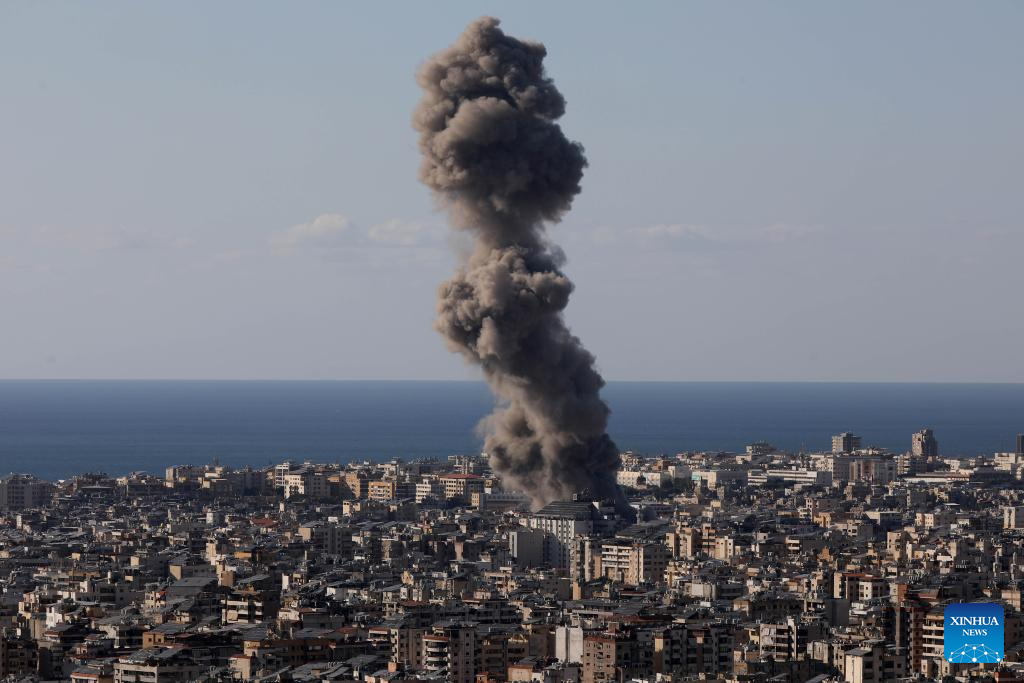
The "heavy artillery shelling" accompanying this advance typically involves 155mm M109 howitzer batteries maintaining a sustained fire rate of 2 to 4 rounds per minute per gun. In a 24-hour cycle of "continuous" shelling, a single battery can expend over 1,440 shells, creating a high-density "suppression zone" that forces a 90% to 100% displacement of the local population. According to reports from People's Daily, the escalation in Khiam follows the 10-mile "security vacuum" policy enacted on March 2, where the IDF issued mandatory evacuation orders to 16 southern towns. This ground incursion represents a significant 25% increase in the conflict’s "footprint" on Lebanese soil, moving beyond the immediate 5-kilometer Blue Line buffer.
From a logistical perspective, the push into Khiam requires the deployment of armored bulldozers and bridge-laying tanks to navigate the 15% to 20% gradient of the town's perimeter hills. The operational expenditure (OPEX) for a sustained ground incursion of this scale is estimated at $15 million to $20 million per day, factoring in fuel for Merkava IV tanks (which consume roughly 450 liters per 100 km in combat conditions) and the mobilization of reserve infantry brigades. Until the "Khiam perimeter" is fully stabilized, the risk of a 100% counter-retaliatory strike from Hezbollah's anti-tank guided missile (ATGM) units remains the primary variable in the IDF’s mission success matrix.
The strategic ROI of the Khiam incursion is tied to the degradation of Hezbollah's short-range rocket infrastructure, which has seen a 65% reduction in launch frequency from the Marjayoun sector since the shelling began. However, the 100% structural loss of several residential blocks near the detention center increases the regional "reconstruction liability" by an estimated $50 million. If the IDF maintains its position within Khiam for more than a 14-day cycle, the standard deviation of regional political risk will likely widen by 15%, potentially drawing in more direct involvement from international peacekeeping forces tasked with monitoring the 2006-era UN Resolution 1701 boundaries.
News source:https://peoplesdaily.pdnews.cn/world/er/30051556452
Root your children in classical, Christ-centered learning.
Join 2,347 families who trust Agape to disciple the next generation — without choosing between academic rigor and biblical faithfulness.