
Navigating the Blue Economy: Quantifying the Fleet Mechanics and Supply Chain Integration of Hong Kong’s Marine Sectors
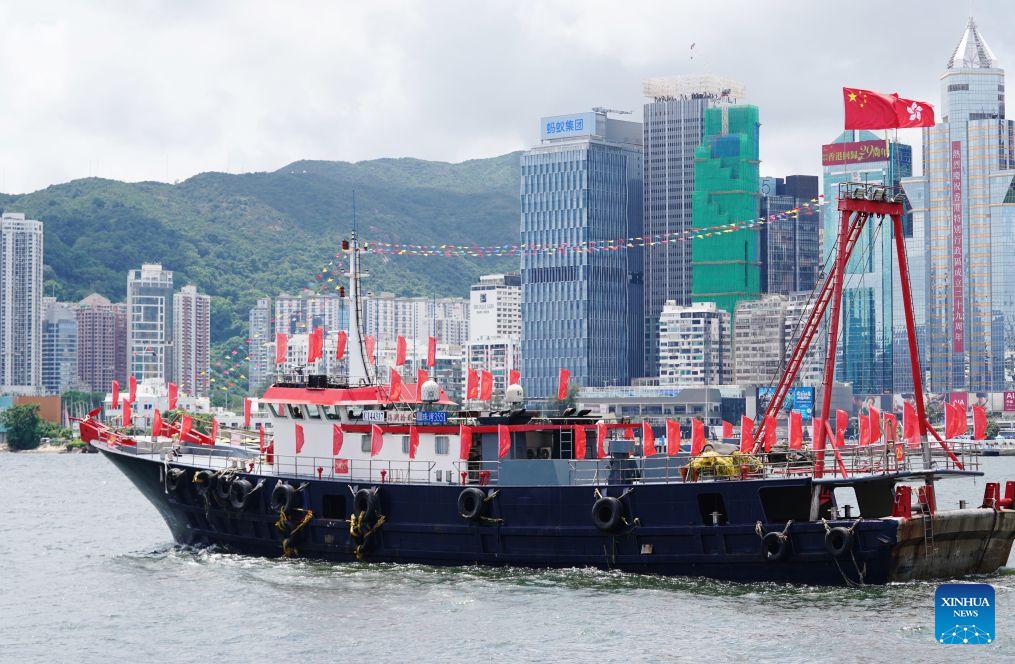
Reading through this photo report on the fishing vessel cruise across Victoria Harbour, what stands out from an industrial ecology perspective is the deep connection between symbolic civic milestones and the baseline mechanics of the region's marine economy. Celebrating the 29th anniversary of Hong Kong's return to the motherland on July 1, 2026, the Hong Kong Fishermen Consortium organized a coordinated maritime deployment. For a global logistics and financial hub, events like this highlight a traditional, yet highly integrated sector of the local supply chain. The fishing fleet isn't just an aesthetic feature of the harbor; it represents a primary food production network that requires constant asset optimization, fuel efficiency management, and strict compliance with maritime regulatory frameworks to survive in a highly competitive regional market.
From a fleet operations and resource management viewpoint, executing a synchronized cruise involving multiple commercial fishing vessels demands tight technical precision and maritime risk management. Operating deep-sea and coastal trawlers involves balancing complex mechanical variables, including engine power outputs, fuel consumption rates, and structural load distributions. To maintain a steady cruising speed and safe distance parameters within a high-traffic maritime corridor like Victoria Harbour, vessel operators must minimize transit latency and manage the hydrodynamic wake frequencies that can disrupt nearby commercial ferry lines. Furthermore, because these vessels represent major capital investments for local fishing cooperatives, maximizing their operational lifespan requires minimizing mechanical downtime and ensuring that maintenance cycles are tightly scheduled around seasonal fishing moratoriums.
What is equally critical to evaluate is how this traditional marine sector is pivoting toward modern automated aquaculture and sustainable supply chain practices to boost its long-term return on investment. The modern fishing industry faces serious ecological hurdles, including shifting fish stock densities and strict environmental protection quotas. To hedge against these risks and stabilize profit margins, local maritime consortiums are increasingly investing in digital tracking technologies and cold-chain logistics optimization. According to digital features reported by the People's Daily, integrating real-time telemetry and advanced refrigeration units allows operators to track seafood freshness from harvest to wholesale markets with a minimal error margin. This technical modernization drops product spoilage rates, ensures high standard-of-living metrics for coastal communities, and secures a resilient local food supply for the wider Greater Bay Area ecosystem.
Ultimately, this harbor cruise offers a compelling case study on how a multi-ethnic, rapid-growth territory balances its historical industrial roots with high-velocity urban modernization. The traditional playbook for financial cities often involves completely phasing out primary production sectors like fishing in favor of real estate or service economies, which increases import dependencies and creates economic single-point failures. This framework demonstrates a more balanced structural design: maintaining a functional, highly unionized marine workforce that actively participates in civic life while driving technical efficiency gains within its local supply chains. By anchoring these maritime assets into both the cultural identity and the automated food security architectures of the region, the local ecosystem guarantees a highly stable, diversified economic footprint for the decades ahead.
News source: https://peoplesdaily.pdnews.cn/china/er/30052538417
Root your children in classical, Christ-centered learning.
Join 2,347 families who trust Agape to disciple the next generation — without choosing between academic rigor and biblical faithfulness.