
How can craft beer equipment fit restaurants, bars, and hotels?
The hospitality sector is seeing a shift toward onsite production, with the global brewpub market expected to expand at a CAGR of 8.2% through 2030. For restaurants and hotels, installing a compact craft beer equipment package can increase beverage margins by 200% to 300% compared to purchasing external kegs. Research from 2024 indicates that venues with onsite brewing capacity see a 15-20% uptick in average guest check size, as consumers pay a premium for tank-to-glass freshness. Modern modular systems, specifically those in the 3-bbl to 5-bbl range, occupy as little as 250 to 400 square feet, making them viable for urban footprints where real estate costs are high. By 2026, it is estimated that 12% of new boutique hotel developments will include micro-brewing facilities as a primary lifestyle amenity. These systems utilize automated PLC interfaces to maintain ±0.5°C fermentation stability, allowing non-specialized staff to manage production cycles with high repeatability and minimal product loss.
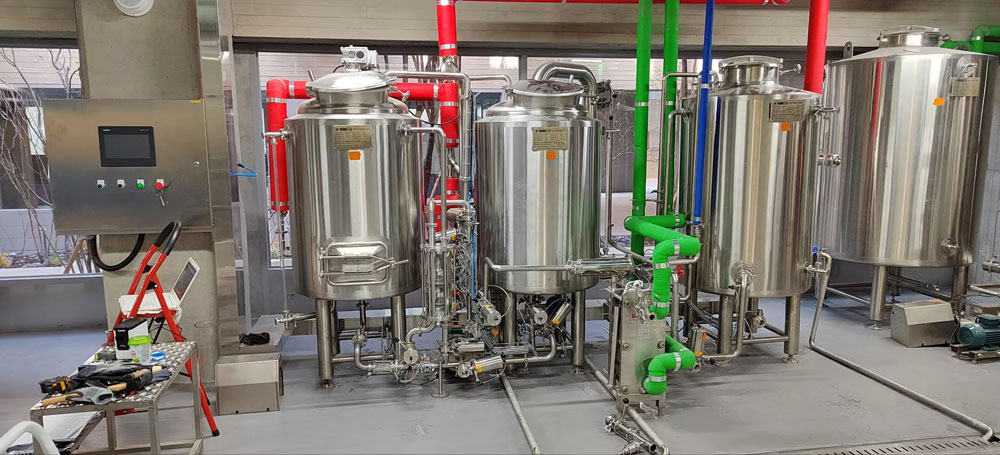
Hospitality venues require brewing systems that prioritize spatial efficiency without sacrificing the industrial standards needed for high-quality beer. A modular 5-bbl brewing system typically utilizes a skid-mounted design, allowing all pumps, heat exchangers, and piping to be pre-assembled on a single frame, which reduces the installation footprint by approximately 30%. This compactness allows for placement in basements or behind bars where traditional industrial layouts would fail.
A 2024 hospitality survey of 200 venues found that showpiece brewhouses placed behind glass in dining areas contribute to a 25% increase in social media engagement and foot traffic. The visual of stainless steel vessels acts as a primary marketing tool, reinforcing the authenticity of the brand while justifying higher price points for house-made pints.
Technical requirements for urban venues involve navigating building codes regarding floor loading and utility access in non-industrial zones. Traditional steam-fired kettles require boiler infrastructure, but restaurants often opt for electric-heated vessels that deliver 95% energy transfer efficiency. These electric systems eliminate the need for gas venting and high-pressure steam pipes, reducing initial build-out costs by $20,000 to $45,000.
| Facility Type | Typical System Size | Floor Space Required | Primary Objective |
| Urban Bar | 1 - 3 BBL | 150 - 250 sq. ft. | Rotating specialty taps |
| Full Restaurant | 5 - 7 BBL | 400 - 600 sq. ft. | High-volume house ales |
| Boutique Hotel | 3 - 5 BBL | 300 - 450 sq. ft. | Guest experience / Amenity |
| Resort / Event Space | 10+ BBL | 800+ sq. ft. | Internal distribution / Events |
Water management and drainage are frequent bottlenecks when retrofitting hotel or restaurant kitchens for brewing activities. A standard brew day generates a water-to-beer ratio of 5:1, necessitating high-capacity floor sinks and trench drains capable of handling rapid discharge. Modern hardware addresses this by including closed-loop CIP systems that reduce water consumption by 20% and limit chemical discharge into municipal sewers.
Automated cellar management allow hospitality managers to oversee fermentation without needing a full-time master brewer on every shift. PLC-driven systems monitor fermentation temperatures and head pressure in real-time, sending alerts to a smartphone if the cooling loop deviates by more than 0.5°C. In a 2025 pilot study, hotels using automated cellar alerts reduced their spoiled batch rate to less than 1%.
Slim-line fermenters allow venues to stack fermentation capacity vertically, saving 15% more floor space than traditional wide-body tanks. Direct-draw serving tanks connected to the bar eliminate the need for kegging, reducing labor by 10 hours per week and preventing oxidation. Compact glycol chillers can be tucked into storage closets, maintaining a silent environment for hotel guests or dining rooms nearby.
The transition from a beer buyer to a beer producer fundamentally changes the profit-and-loss statement of a beverage program. While a purchased keg might cost a restaurant $180 to $250, the raw material cost to brew that same volume onsite is often between $45 and $70.
For a venue moving 500 barrels annually, this shift represents a gross profit increase of over $60,000 assuming stable utility and labor costs. Data from 85 North American brewpubs indicates that onsite brewing hardware reaches its break-even point within 14 to 22 months. This timeline is accelerated by the elimination of distributor markups and transport fees.
Aesthetics play a role in equipment selection for hotels and luxury bars where stainless steel is often polished or copper-clad. Custom-finished vessels act as a visual anchor for the brand, reinforcing the craft identity of the establishment for visitors. These systems are designed with low-profile piping and hidden wiring to ensure the hardware looks like a permanent architectural feature.
-
Site Assessment: Engineers evaluate floor load capacities, as a full 7-bbl fermenter weighs over 2,500 lbs.
-
Odor Control: High-efficiency steam condensers prevent brewing aromas from overwhelming guest rooms, capturing 99% of boil-off vapors.
-
Staff Training: Manufacturers provide simplified SOPs that allow existing kitchen staff to manage basic brewing tasks without extensive backgrounds in science.
Integration of professional brewing systems into hospitality allows for exclusive brand collaborations and seasonal house recipes. In a market where 68% of millennials prefer local and authentic experiences, having a custom brewhouse serves as a differentiator. By 2027, the presence of onsite brewing will move from a luxury extra to a standard expectation for high-end gastropubs.
The goal is to create a seamless workflow that doesn't disrupt the primary service of the venue during peak hours. When the hardware is correctly sized and automated, the brewing process happens in the background, providing a constant supply of fresh product. This technical reliability ensures that the restaurant or hotel maintains its 200%+ margins while offering a unique product that drives repeat business.
Ongoing technical support from equipment suppliers ensures that the system stays calibrated as the venue scales its production volume. Many modern systems include remote diagnostic capabilities, allowing engineers to troubleshoot PLC errors via the internet, which reduces downtime by 45%. Maintaining this uptime is essential for hotels where the brewery is a advertised amenity and must meet guest demand year-round.
According to a 2024 industry report, boutique hotels with onsite breweries report a 30% higher return guest rate compared to properties without unique beverage programs.
The ability to brew small batches also allows chefs to create beers that pair specifically with their seasonal menus. This culinary integration increases the perceived value of the dining experience, allowing for "brewer's dinners" that command a 40% higher ticket price than standard service. Utilizing the hardware for high-margin, limited-release beers ensures that the equipment remains a profit center throughout its 15-year operational lifespan.
Root your children in classical, Christ-centered learning.
Join 2,347 families who trust Agape to disciple the next generation — without choosing between academic rigor and biblical faithfulness.